
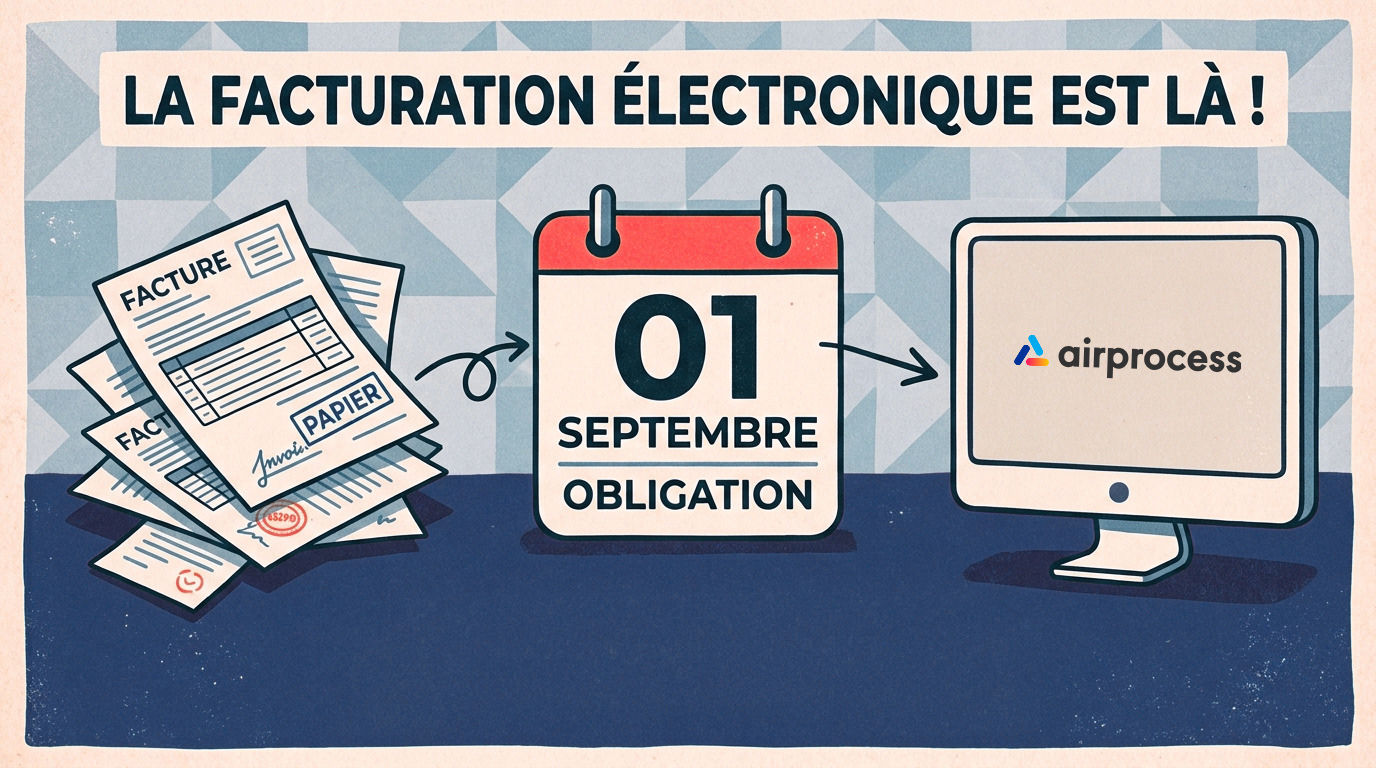
As of September 1, 2026, the receipt of electronic invoices becomes mandatory for all French VAT-registered businesses. No exception of any size. From micro-enterprises to large groups, each must be able to receive its supplier invoices in a structured format, via an approved platform registered with the tax administration.
Most articles stop at this step: selecting your platform, registering in the directory, ticking the compliance box. This is necessary, but far from sufficient. Because once the invoice is received, the real question begins: who validates it, how, within what timeframe, and with what traceability?
What the approved platform does, and where it stops
An approved platform has a precise and limited role: to transport the invoice. It receives the structured feed sent by your supplier, checks its conformance to the format, and deposits it in your workspace. It also transmits certain data to the tax administration. Its job ends there.
What it does not do: route the invoice to the right person, reconcile it with the purchase order, manage a price discrepancy, follow up with a validator who is late, or trace who approved what and when. All of this is your responsibility. And it is precisely here that delays, errors, and disputes—costing you dearly on a daily basis—hide.
What really starts after receipt
Receiving an invoice has never been the problem. The problem is what happens next in the company. A supplier invoice actually triggers an entire chain of business processes:
Matching with the purchase order. Does the invoice match the issued purchase order? Do quantities, prices, and references align? Any discrepancy must be identified before payment, not after.
Approval by the right people. Depending on the amount, the department, or the type of expense, the invoice must go through one or more approvers. A manager for small amounts, a finance department beyond a threshold. This workflow varies from one company to another and changes over time.
Discrepancies and disputes management. When something doesn't match, you must open a dispute, document the exchange with the supplier, suspend payment, and follow the resolution through to the end.
Reminders and deadlines. An invoice stuck with an absent validator means late payment, possible penalties, and a deteriorating supplier relationship. Tracking deadlines becomes a tangible challenge.
Traceability. Who validated, when, on what basis? In case of audit, dispute, or internal audit, you must be able to reconstruct the complete history of each invoice, without piecing together an investigation from scattered emails.
The trap of manual processing
Many companies will cross the September deadline by doing the minimum: the approved platform deposits the invoices, and a colleague retrieves them to process them manually. A tracking spreadsheet, validation emails, shared folders. This setup holds as long as volumes are low and the team is stable.
It quickly shows its limits. Validations get lost, deadlines lengthen, no one knows at what stage a given invoice is, and the audit becomes a tedious exercise. Compliance with the format doesn't solve any of this. You are compliant on the transport of the invoice, and still manual in its processes.
The 2026 deadline is actually a good opportunity to rethink this internal part. Since your inbound flows are becoming structured and predictable, it's worth building on top of a clear, automated, and measurable process.
How a no-code workflow takes over
That's exactly the role of Airprocess. The platform does not issue or receive invoices in the sense of the reform; it is not an approved platform. It comes in after, at the business process level, where your approved platform stops.
Concretely, you model your supplier invoice validation workflow without writing a single line of code. The received invoice enters a structured form. It automatically sends the invoice to the right person, without anyone having to transfer it manually, according to your rules: amount, department, expense category. Each step is timestamped. Reminders are sent automatically when a deadline is exceeded. Discrepancies with the purchase order open a dedicated dispute path. And every invoice keeps a complete, exportable audit trail, from submission to payment.
You move from a completely disorganized tracking with spreadsheets and emails to a single, centralized process guided by dashboards. Processing times become visible, hence controllable. Oversights between departments disappear, because nothing moves forward without going through the defined circuit.
A processing solution hosted in France
Your supplier invoices contain sensitive data: amounts, commercial terms, identities, bank details. Entrusting them to a processing tool subject to extraterritorial regulations is not neutral, especially in a context where data sovereignty becomes a governance criterion in its own right.
Airprocess is a French solution, hosted in France. The processing of your invoices and all of your business processes remain under national jurisdiction. You gain greater control over your data at the very moment you digitize a flow that touches the core of your activity.
The deadline as a starting point
The September 1, 2026 makes receipt mandatory. But stopping at transport conformity means you are only addressing the visible part. The real value is downstream: in a seamless validation workflow, reliable matching, deadlines met, and flawless traceability.
The approved platform brings you into compliance. Airprocess makes you efficient.
Do you want to see what a supplier invoice validation circuit built in Airprocess looks like? Book an online demo and walk away with a clear view of what you can implement before the deadline.