

Imagine a public administration where processes are smooth, tasks are automated and users are satisfied.
This dream can become reality with AirProcess thanks to Business Process Management (BPM).
By integrating BPM, your public organization can transform its operations to meet citizens' needs.
Whether you are an officer or a decision-maker, implementing BPM offers concrete solutions to simplify procedures, optimize data management and improve communication within your teams.
In this article, discover how BPM enables you to:
- Align your processes with sustainable development goals.
- Automate the distribution of social benefits to reduce inequalities.
- Manage resources sustainably thanks to intelligent workflows .
- Improve infrastructures with optimized planning.
By the end of your reading, you will know how to integrate BPM into your processes, transform your administration and meet citizens' expectations with simple and effective tools.
1) Introduction to BPM in the public sector
a) Definition of Business Process Management (BPM)
1) Explanation and importance
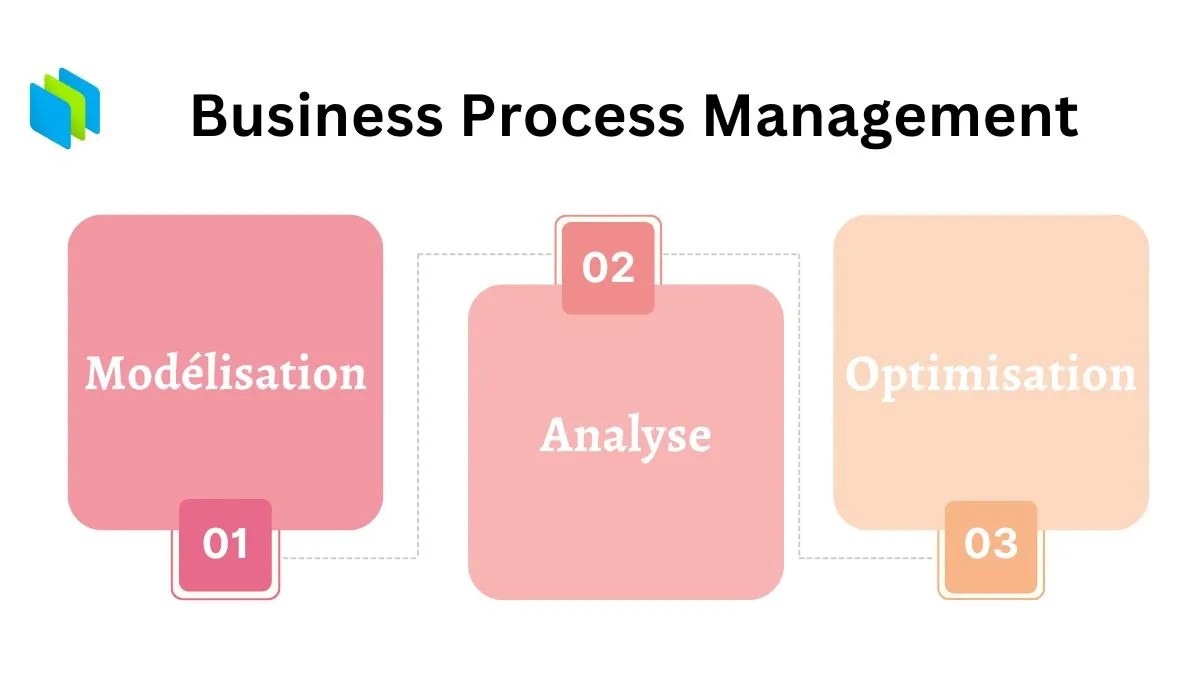
Business Process Management is a methodical approach that improves the management of business processes by:
- 1️⃣ Modeling them.
- 2️⃣ Analyzing them
- 3️⃣ Optimizing them.
Therefore, in the public sector, this methodology is essential to simplify and streamline administrative operations.
Thus, by automating for example the processing of complex grant applications, large administrations can reduce response times and improve citizen satisfaction.
2) Practical case example in the public sector
A concrete case of BPM application in the public sector is the digitization of building permit procedures in town halls.
Traditionally, processing permit applications involves several manual steps and interactions between different departments. Thanks to BPM, this process can be automated.
Now it is possible to submit applications online, monitor their progress, and significantly reduce processing time.
This change has not only simplified procedures but has also increased transparency and the traceability of administrative processes.
Citizens can now easily access information and monitor the status of their application without having to travel.
This is an important advancement for town halls, which can better manage requests and provide a more efficient service to their residents.
b) The role BPM can play in the public sector
1) How BPM helps achieve strategic objectives
BPM helps public administrations achieve their strategic objectives by improving their business processes.
For example, automating workflows can reduce costs, free up resources and increase the quality of services offered to citizens.
Moreover, by facilitating digital transformation, BPM enables administrations to become more agile and responsive to user needs.
2) Comparison with other sectors (private sector, NGOs)
While the private sector uses BPM to increase productivity and profitability, the public sector adopts it mainly to improve transparency and the quality of public services.
Unlike NGOs, which may focus more on social impact, public administrations must balance efficiency with strict compliance and regulatory requirements.
For example, a private company might use BPM to optimize its supply chain, while a public administration would use it to manage processes such as waste management or the issuance of birth certificates.
2) Challenges in the public sector
a) Challenges of the public sector in process management
1) Bureaucracy, slow processes, lack of transparency
The public sector is often criticized for heavy bureaucracy, slow processes and lack of transparency.
These issues lead to significant delays in case handling, citizen dissatisfaction and a loss of trust in institutions.
Sometimes, the management of building permit applications can take several months due to multiple manual steps and redundant checks.
2) Illustration with concrete cases
Take the example of a local administration that processes grant applications for associations.
Without BPM, the process involves multiple levels of approval, constant exchanges of paper documents and frequent errors due to data duplication.
As a result, associations may have to wait months before receiving a response, which complicates their financial management and activity planning.
b) Opportunities offered by BPM
1) Improved efficiency, cost reduction, increased user satisfaction
BPM offers solutions to overcome these challenges by automating and improving business processes.
By digitizing forms and automating workflows, administrations can process grant applications more quickly and with fewer errors.
This reduces operational costs and improves user satisfaction thanks to shorter processing times and better service quality.
2) Explanatory video on process automation
https://www.youtube.com/embed/tpdPXe0-xGs?feature=oembed
3) Implementing BPM in the public sector
a) Steps for implementing BPM
1) Analysis of existing processes
Analyzing existing administrative processes is an important step in implementing BPM.
It allows understanding workflows, identifying bottlenecks and assessing improvement opportunities.
To do this, administrations can use online mapping tools, such as AirProcess, which facilitate the visual modeling of business processes.
This tool allows creating detailed diagrams illustrating each step of the process and the interactions between the different stakeholders.
2) Defining objectives and KPIs
Defining clear objectives and key performance indicators (KPIs) is crucial to measure process performance and the impact of improvements.
Public administrations should track indicators such as case processing time, user satisfaction rate and operational costs.
Thus, a KPI specific to the public sector could be the percentage of requests processed within regulatory timeframes.
These KPIs allow monitoring process performance and adjusting strategies accordingly.
3) Designing and modeling new processes
Designing and modeling new processes often uses standards like BPMN (Business Process Model and Notation).
BPMN allows creating clear and standardized diagrams that facilitate understanding and communication between teams.
Therefore, a BPMN diagram for managing building permits could include steps such as:
- Submission of the application.
- Verification of documents.
- On-site inspection.
- Final approval.
These models help visualize possible improvements and identify automation opportunities.
4) Software deployment and training
Deploying new processes and training staff are important steps to ensure BPM success.
It is essential that staff understand the new tools and procedures.
Thus, external resources, such as online tutorials, MOOCs and in-person training sessions, can be used to facilitate this transition.
5) Monitoring and continuous improvement
Monitoring and continuous improvement are indispensable to ensure that processes remain aligned with the administration's objectives.
Monitoring techniques, such as using dashboards and feedback systems, allow tracking performance in real time.
Performance assessment tools, like process audits and periodic reviews, help identify areas for improvement and adjust processes accordingly.
Thus, a dashboard enabling visual management of workflows could display:
- Average processing times.
- User satisfaction rates.
- Operational costs.
Therefore, this information would provide an overview of process performance.
4) Use cases and concrete examples
a) Examples of BPM implementation
1) Digital transformation of a town hall
Consider the example of a town hall that undertakes the digitization of its building permit request processes.
Before BPM implementation, processing an application can take on average three months, with multiple steps and frequent manual interactions.
After implementing BPM, using the BPMN standard to model processes, the timeframe can be reduced to six weeks.
Indeed, applications can be submitted and processed online, which improves traceability and citizen satisfaction.
A comparative table before/after will highlight these gains in time and transparency.
2) Process automation in social services
Social services can greatly benefit from process automation.
Take the example of managing benefit applications.
Before automation, officers must manually handle each application, which can lead to delays and errors.
Thanks to BPM implementation, process flows will be automated.
A chart illustrating processing times before and after automation will show a notable reduction in delays, going from several weeks to a few days.
This optimization can also allow staff to focus on higher value-added tasks, which will improve the quality of service provided to users.
These concrete examples show how BPM can transform operational processes in the public sector by improving productivity, reducing costs and increasing user satisfaction.
b) BPM and crisis management: optimizing the responsiveness of public services in emergencies
1) The role of BPM in crisis management
BPM can play a key role in crisis management by enabling effective coordination of resources and rapid responses to emergency situations.
By modeling processes, public administrations can anticipate the steps needed to respond to a crisis, thus ensuring better preparedness and smooth execution of actions.
a) Automation of critical processes
Automating critical processes is essential to reduce reaction times and minimize human errors.
Therefore, during a natural disaster, automated workflows can trigger:
- 1️⃣ Immediate alerts to response teams.
- 2️⃣ Assignment of specific tasks.
- 3️⃣ Real-time tracking of operation progress.
b) Optimized coordination and communication.
BPM also facilitates communication between the different services and organizations involved in crisis management.
Using dashboards and monitoring systems, managers can track process performance in real time and adjust actions according to emerging needs.
2) Case studies of crisis management with BPM
a) Managing a pandemic
During a pandemic, administrations can use AirProcess to manage the health crisis effectively.
Thus, implementing automated processes for vaccine distribution can coordinate:
- 1️⃣ Stocks.
- 2️⃣ Appointments.
- 3️⃣ Patient follow-up.
Thus, this organization reduces delays and improves traceability.
b) Response to natural disasters
In the case of natural disasters such as floods, AirProcess can be used to coordinate relief efforts.
Automated processes make it possible to:
- 1️⃣ Manage requests for aid.
- 2️⃣ Organize temporary housing.
- 3️⃣ Track the distribution of essential resources.
Which ensures a rapid and structured response.
4) Benefits of integrating BPM in emergency situations
a) Improved traceability and compliance.
Integrating BPM improves the traceability of actions and ensures compliance with established protocols.
Thus, during a food crisis, tracking distribution chains ensures that resources reach affected areas clearly and transparently.
b) Flexibility and adaptability of processes.
BPM also makes processes more flexible and adaptable.
In case of changing circumstances, workflows can be quickly adjusted to meet new challenges, thus ensuring agile and smooth crisis management.
c) Strategic alignment between BPM and the Sustainable Development Goals (SDGs) in the public sector
Public administrations can use Business Process Management to align their operational processes with the Sustainable Development Goals (SDGs).
By modeling and automating business processes, they ensure more responsible and transparent management of their resources.
a) Reducing inequalities.
BPM allows standardizing processes, thus ensuring fair treatment for all citizens.
Thus, by automating social aid distribution processes, administrations ensure that resources are distributed uniformly and without bias, which reduces inequalities.
b) Sustainable resource management.
By using automated workflows , administrations can monitor the use of natural and financial resources, which reduces waste.
Accurate and continuous resource tracking allows optimizing their use and implementing more environmentally friendly practices.
c) Infrastructure improvement.
By automating project management processes, administrations can monitor work progress in real time, quickly identify obstacles and adjust plans accordingly.
This ensures that projects are completed on time and according to required quality standards, thus improving public infrastructure.
By aligning operational processes with the SDGs, BPM enables public administrations to contribute concretely to sustainable development goals while improving the transparency and quality of their operations.
2) Benefits and return on investment
a) Efficiency and resource optimization
Implementing BPM improves resource management in the public sector.
By automating business processes, administrations can reduce processing times and operational costs.
b) Improved transparency and user satisfaction
BPM also improves process transparency and user satisfaction.
Thanks to dashboards and real-time tracking systems, users can check the status of their requests at any time, which strengthens trust in public services.
c) Reduction of errors and fraud
Finally, BPM helps reduce errors and fraud in the public sector.
By standardizing and automating processes, it becomes easier to detect and correct anomalies.
5) Integration of AirProcess in the public sector
Business Process Management (BPM) in the public sector offers many opportunities to improve process management.
AirProcess, with its no-code platform, is perfectly positioned to help public administrations automate and optimize their processes.
By using AirProcess, administrations can easily create and customize workflows in minutes.
This flexibility allows responding quickly to the specific needs of different public services for document management or other needs.
For example, a building permit management service can model its end-to-end processes, from application submission to final approval, using forms and automated workflows .
One of the major advantages of AirProcess is the ability to create custom forms tailored to the specific needs of public sector business processes.
Officers can configure personalized views to organize performance management and visualize data optimally, thereby facilitating traceability and request tracking.
Moreover, the platform helps reduce processing times and operational costs.
For example, before automation, manual processing of requests can be slow and prone to errors.
With AirProcess, process flows are automated, which reduces delays and improves citizen satisfaction.
AirProcess also offers monitoring tools and dashboards that allow tracking process performance in real time.
Administrations can thus quickly identify improvement points and adjust their processes accordingly.
A before/after comparison table can illustrate the gains achieved in terms of costs and timelines.
In short, integrating AirProcess in the public sector makes it possible to automate and optimize business processes, reduce costs and improve the quality of service provided to users.
Thanks to its flexibility and ease of use, AirProcess is a valuable ally for the digital transformation of public administrations.
6) Conclusion
Business Process Management (BPM) in the public sector presents many advantages.
Implementing BPM solutions makes it possible to automate business processes, streamline workflows and improve the productivity of administrations.
Thanks to process automation, repetitive tasks are reduced, freeing up time for public officers who can focus on higher value-added missions.
Moreover, the digital transformation facilitated by BPM improves traceability and the quality of operations.
Among the important steps to implement an effective BPM system are modeling existing processes, integrating with information systems such as ERPs and CRMs, and using workflow tools to orchestrate the various activities.
Intelligent automation and the implementation of AI in business processes enable faster and more informed decision-making.
Adopting BPM in public administrations is an important step to modernize and improve the services offered to citizens.
Thus, administrations are encouraged to integrate BPM solutions to benefit from the flexibility and agility offered by these tools.
By standardizing processes and using advanced technologies such as low-code and artificial intelligence, administrations can streamline their operations and respond more effectively to citizens' needs.
In addition, participating in webinars, consulting research reports and following emerging BPM trends allows public decision-makers to stay informed and implement innovative strategies.
Success stories in other administrations show that it is possible to radically transform management processes to achieve excellence.
So, don't wait any longer, take part in your administration's digital transformation and improve your processes today.